Groundbreak Redmond Concrete CompanyGroundbreak Redmond Concrete CompanyRequest an estimate(425) 285-8618

Slab foundation building in Redmond WA - a floor that sits on firm, even ground

Planning a new home, addition or garage on a slab? We pack the ground firm first, so the concrete settles evenly and resists cracking.

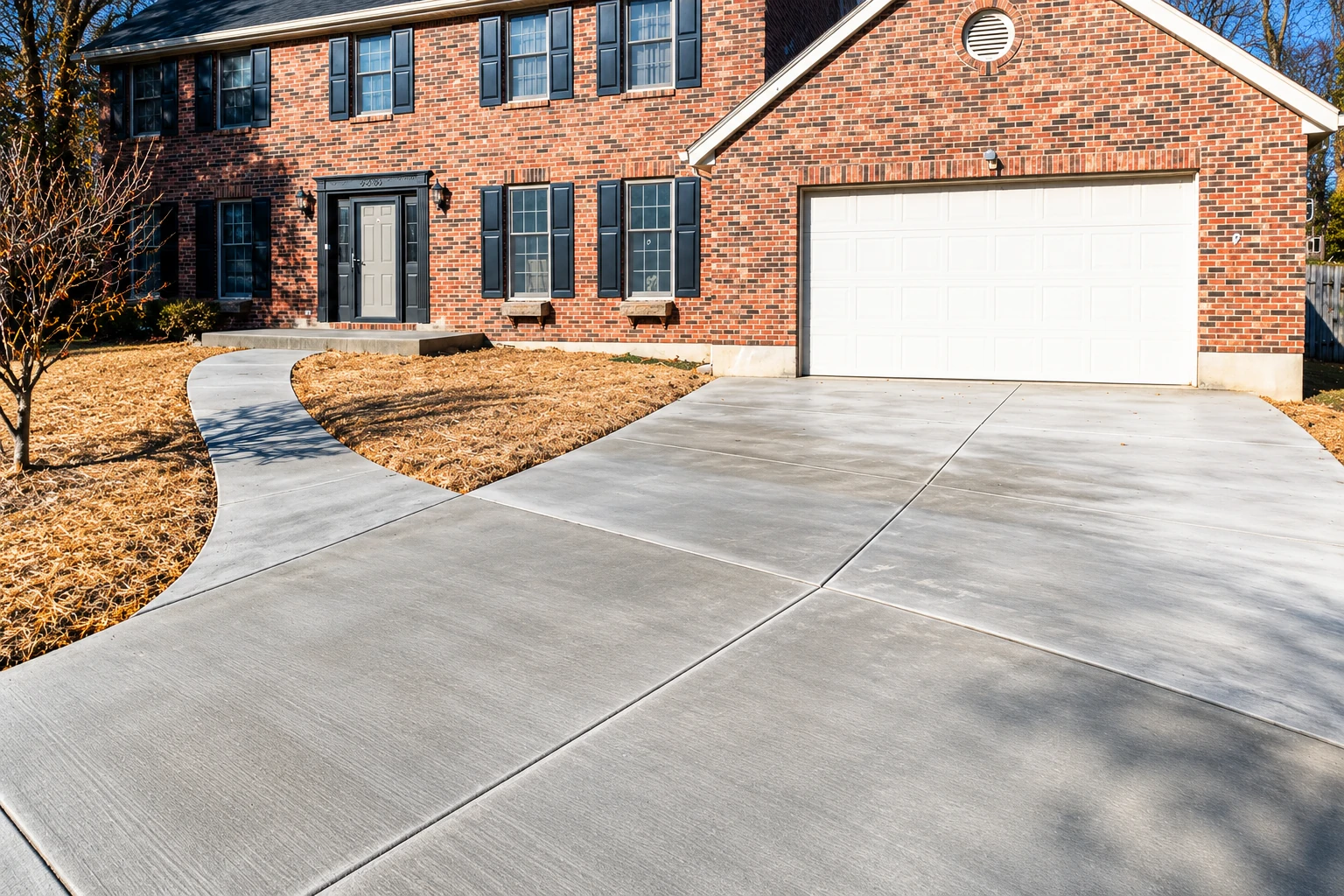
A broad concrete driveway curves toward a red-brick house and white garage, with expansion joints across its smooth surface.

What does building a slab foundation in Redmond involve?

Slab foundation building in Redmond means we prepare and pack the soil, then pour a concrete slab on it, so your house, addition or garage sits on ground that settles evenly and the slab holds up against cracking.

Most people who call about a slab are planning a new house, an addition or a detached garage, and the first thing I want to know is what the ground is like, because that decides most of the job. The price moves mostly with the size of the slab and how much work the soil needs before any concrete shows up, like digging out soft dirt, bringing in and packing base, and sorting out where the water runs. The schedule turns on the permit and its inspections, the weather and how the soil work goes once we're digging, and if the lot needs more support than a slab gives, concrete footings may come into the conversation. We check the permit side for your address before we set a date, and the estimate gives you a figure for your own lot.

How we build a slab foundation

A slab depends on how well the ground under it is packed, so that's where I put most of our attention. We start by looking at where the water runs on your lot, because a slab that sheds water toward the house sends it right where you don't want it. Then we dig out to firm soil and pack the subgrade, the ground the slab sits on, in layers instead of raking loose dirt level, since loose fill settles and takes the concrete down with it. We set the forms, lay the vapor barrier and the rebar, the steel that keeps the slab holding together, and pour early in the day so midday heat doesn't dry the top too fast and leave it weak and dusty. Once it's finished, we cut control joints, shallow grooves that give the concrete a planned place to crack, and protect it while it cures, which is the wait while it gains strength. The ground work is buried by the end of the first day, which is why it's the first thing people want to trim from a budget and the last thing I'd cut. If your lot slopes, we'll talk honestly about whether a slab is the right choice at all.

If a crawlspace or basement makes more sense for your plans, that's foundation installation, and I'd rather walk the lot with you before you decide than after. Small business owners who need a slab for a shop sometimes pair it with concrete parking lot building, and doing the soil work for both at once saves digging the same ground twice.

One-pour slab with thickened edges

The edges are dug deeper and poured together with the floor, so the whole foundation goes in at once. It suits level lots and simpler buildings like a detached garage or a shop, where one pour keeps the job straightforward.

Slab inside footings and low walls

We pour footings and a short wall around the outside first, then pack the inside and pour the slab within it. It suits a lot that's close to level but not quite, or a house where the floor needs to sit a bit higher than the yard to keep water away.

Why Redmond homeowners call Groundbreak Redmond Concrete Company for slab work

The owner walks your lot first

I come out for the estimate myself, because a slab job is decided by the ground and the water, and I want to see both before giving you a number. I'll ask a lot of questions, and you'll know what you're paying for before we start.

Our own crew, with me running it

Our own crew does the work, and I run the job, so the person who looked at your soil is the one watching it get packed. Nobody new shows up on pour day wondering why the plan says what it says.

Pouring and fixing concrete since 2013

We've been at this since 2013, and a lot of what I know came from breaking up old slabs to see why they failed. Break up a cracked slab and the reason is usually sitting right under it, which is why we spend our time there.

Registered in Washington, licensed and insured

Washington requires every construction contractor to register with the state, and it's a fair thing to ask anyone you hire about. We're licensed and insured, and I'm glad to go over it when you call (425) 285-8618 or at the estimate.

Get a slab foundation estimate for your lot

Send the form or call (425) 285-8618, and we'll reply within one business day to set a time to come out. The estimate is free, done on site and comes with no obligation. It helps to have your project type, a rough idea of how your lot slopes and the flooring you plan to put over the slab ready.

Location
Redmond, WA 98052
Hours
Mon–Fri: 8 AM–11 PM, Sat–Sun: 7 AM–11 PM

Slab foundation building in Redmond and the cities around it

The City of Redmond issues building permits for new homes, additions and garages, and a slab usually goes in as part of one of those projects, but the city's list names those projects and not slab foundations on their own, so it doesn't settle whether your slab needs a permit. Before we set a date, we find out which office covers your address and what your project calls for, then tell you plainly who'll handle the permit and the inspections. That matters here because the city wants inspections requested throughout a permitted job and before anything is covered up, and on a slab the base and the steel get buried on pour day, so a skipped inspection can hold the project up. If the work also means clearing or rough grading the lot for a development project, owners apply to the city for clear and grade approval as well.

Parts of Redmond are mapped as seismic hazard areas, where loose, low-density soil with groundwater close to the surface can settle or liquefy, meaning lose its strength, in an earthquake. The city's maps are only a general guide, and a qualified consultant decides in the field where a hazard area actually runs, so if your lot is near one, that's worth settling before you commit to a slab. Around here we see plenty of lots that fall toward the street and soil that stays wet through the rainy months, and we're based in Redmond and do the same work in Kirkland, Sammamish and the other cities around it. If your city isn't on our pages, just ask.
Questions people ask before they pour a slab

Is my lot in Redmond right for a slab foundation?

A slab works where the ground is level across the property and the soil is well packed, so a sloped lot is the main reason to think twice. Seattle-area guidance says a slab is quicker and easier to build than other foundations, which brings labor costs down considerably, but only when the ground suits it. Thicker slabs and stronger concrete still crack on poorly packed soil, so ask any contractor how they'll compact the ground before the pour.

How much does a slab foundation cost near Redmond?

A slab foundation in the Seattle area usually costs about $9 to $17 per square foot installed. That's what the market charges for the finished foundation, not our price. Where your job lands depends mostly on the size and the ground work your lot needs, which I'll look at when I come out.

Do I need a permit for a slab foundation in Redmond?

If the slab is for a new home, an addition or a garage, it falls under that project's building permit from the city. The city's list doesn't name slab foundations on their own, so for anything else we check what your address calls for before we set a date.

How long before I can walk on or build on a new concrete slab?

Seattle-area guidance says a new slab should be walkable within 48 hours, and waiting a week before putting heavier loads on it is the safer choice. That means layout and foot traffic can start early, but lumber piles, equipment and vehicles should wait out that first week. Concrete takes a month to fully cure, so ask us which later work fits into that month.

What causes flooring to come loose over a concrete slab?

Water vapor rising through the slab can make moisture-sensitive flooring adhesives and coatings fail. Floors can then loosen, warp or discolor, turn into a trip hazard, and possibly grow fungus and start to smell. Tell us what flooring you plan to put down so we can talk it through before the pour.

Call (425) 285-8618