Stamped and colored throughout
This suits patios and front walks where you want the look of stone, brick or tile across the whole surface. It takes more finishing time and more care to keep the color even, so it's the choice when looks matter most.
Plain gray slab, or a stamped patio that's faded and slick? We help you pick a pattern, color and sealer you can afford to keep up.
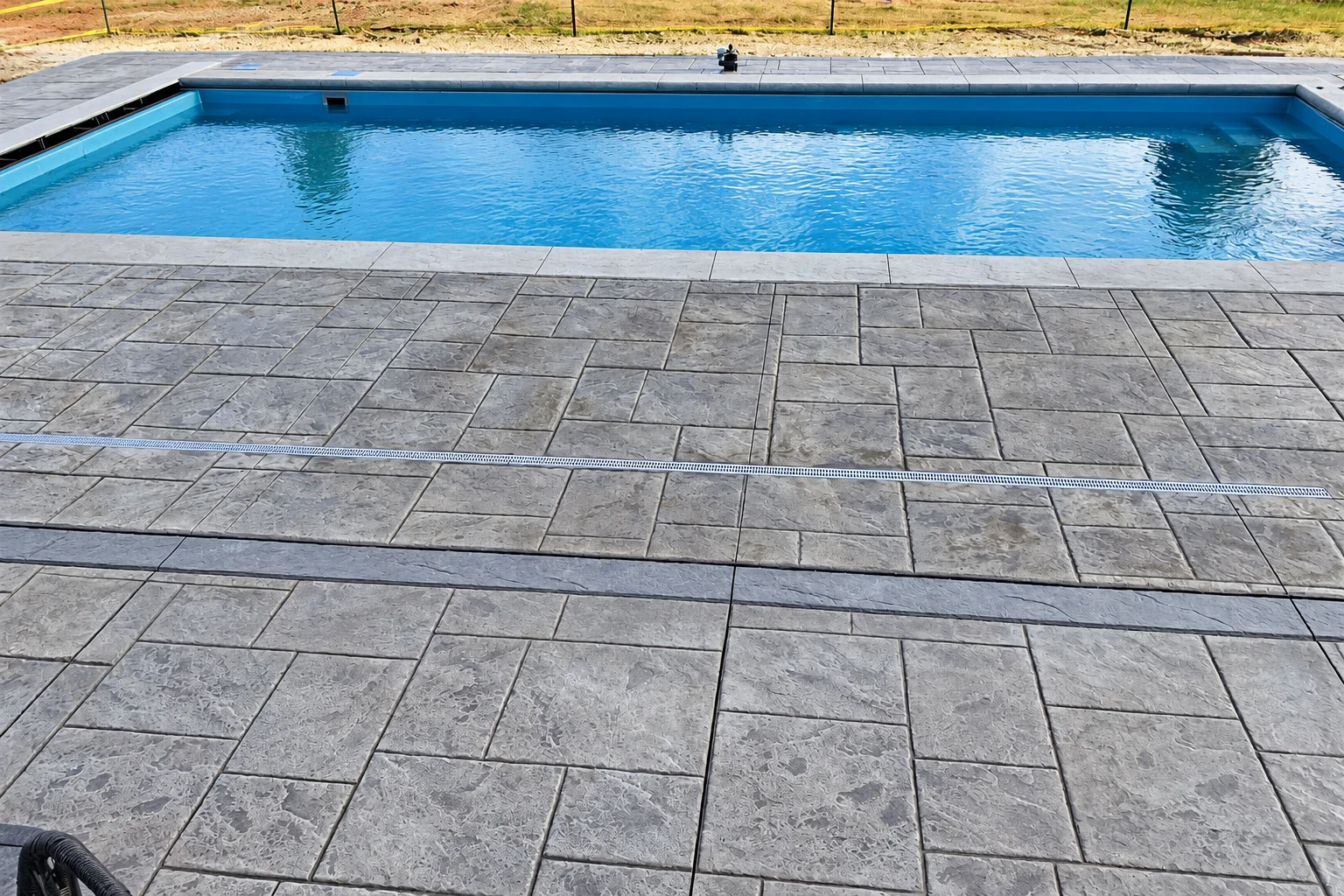
Decorative concrete in Redmond, WA is a slab that's stamped with a pattern, colored or edged with a border, so a patio, walk or driveway looks like more than plain gray, and we pour it over a dug-out, packed base so the pattern isn't sitting on ground that settles.
Most people call because the slab they have is plain, cracked or sinking, or because an old stamped concrete patio has faded and gone slick. The price moves with the size, how busy the pattern is, how many colors and borders you want, and what's under the old concrete, since a bad base has to come out before anything pretty goes on top. The schedule turns on the weather, on whether the city needs to sign off on work near the street, and on the wait before the new slab can be sealed. Your own number comes from looking at your site, because I'd rather see what's there than guess over the phone.
I come out for the estimate myself, so the one who looks at your old slab is the one standing there when the truck shows up. Our own crew does the work with me running it, and nobody hands your patio off to someone who never saw it.
We've been at this since 2013, and I learned a lot of the trade by breaking up old slabs to see why they failed. Before we price yours, I want to know what went wrong with the old one, so the new one doesn't fail the same way.
Washington requires every construction contractor to register with the state Department of Labor and Industries and to be bonded and insured, and you can look anyone up there before you sign. We're licensed and insured. Call (425) 285-8618 or use the form to set up a visit.
We reply within one business day. Send the rough size in square feet, what's there now and the design you have in mind, and I'll set a time to come out for a free on-site estimate, with no obligation. You'll know what you're paying for, and who's handling any permit, before we set a date.
If your project touches the right-of-way, the public strip along the street, or restricts access to the street or sidewalk while we work, the city's Public Works Director issues the permit for it. That usually comes up with a driveway or walk that meets the street. Before we set a date, we find out which city or county office covers your address and what your project calls for, then tell you plainly who'll handle the permit and the inspections.
Bigger jobs bring in the city's stormwater rules. In Redmond, a project that adds or replaces 2,000 square feet or more of hard surface, or disturbs 7,000 square feet or more of ground, needs a low impact development assessment as part of its drainage report. The city counts turning a dirt or gravel area into concrete as new hard surface, and where rain soaks down to the groundwater that supplies drinking water, it asks for extra care and pollution controls. Redmond also wants concrete truck washout kept off the ground and out of storm drains, streets and streams, so it's fair to ask any crew where theirs will wash out. Around here we see a lot of roof and driveway runoff headed toward slabs, so where the water goes gets settled before the pattern does. We're based in Redmond and work in the cities around it, including Kirkland and Sammamish, and if your city isn't on our pages, just ask.
Cost guides put stamped concrete in the Seattle area at about $12 to $28 per square foot, which is the going rate for the work, not our price. Where your job lands depends on its size, how complicated the design is and local labor rates. We give you our own number after I've seen your site.
Decide first how much upkeep you want, because detailed designs with several colors, borders and custom inlays cost more and need frequent maintenance to keep their look. Those designs can add curb appeal and resale value, so they often earn their keep on a front walk or entry. A simpler pattern in one or two colors usually suits a back patio that just needs to look good and hold up.
Industry guidance says to wait 28 days after the concrete is placed before sealing it, unless the sealer is built into the mix. The slab keeps curing for weeks after the pour, so sealing is usually a later step on the calendar, not part of pour day.
A penetrating sealer usually needs reapplying every 5 to 7 years, while a topical acrylic sealer gets a new coat whenever it starts to wear. The topical kind sits on the surface where you can see it, and the penetrating kind soaks in and disappears once it's on, so you're choosing the look and the upkeep together. One sealer maker notes the surface can lose grip with each coat and that sand added to the wet sealer can offset it, so ask about that before it goes on.
De-icing salt is the usual cause, and that flaking of the top layer, called scaling, is the most common kind of frost damage concrete gets. Guidance says to use sand instead of deicers during the first winter, so keep some sand on hand for icy days that first season.