A new deck around a new pool
This suits a pool that's going in now, because the deck and the coping can be planned together from the start. We work out with your pool builder where the gap at the edge goes and which way the deck drains.
Cracked, flaking or chipped concrete around your pool? We pour a new deck that sheds water and leaves room at the pool edge.
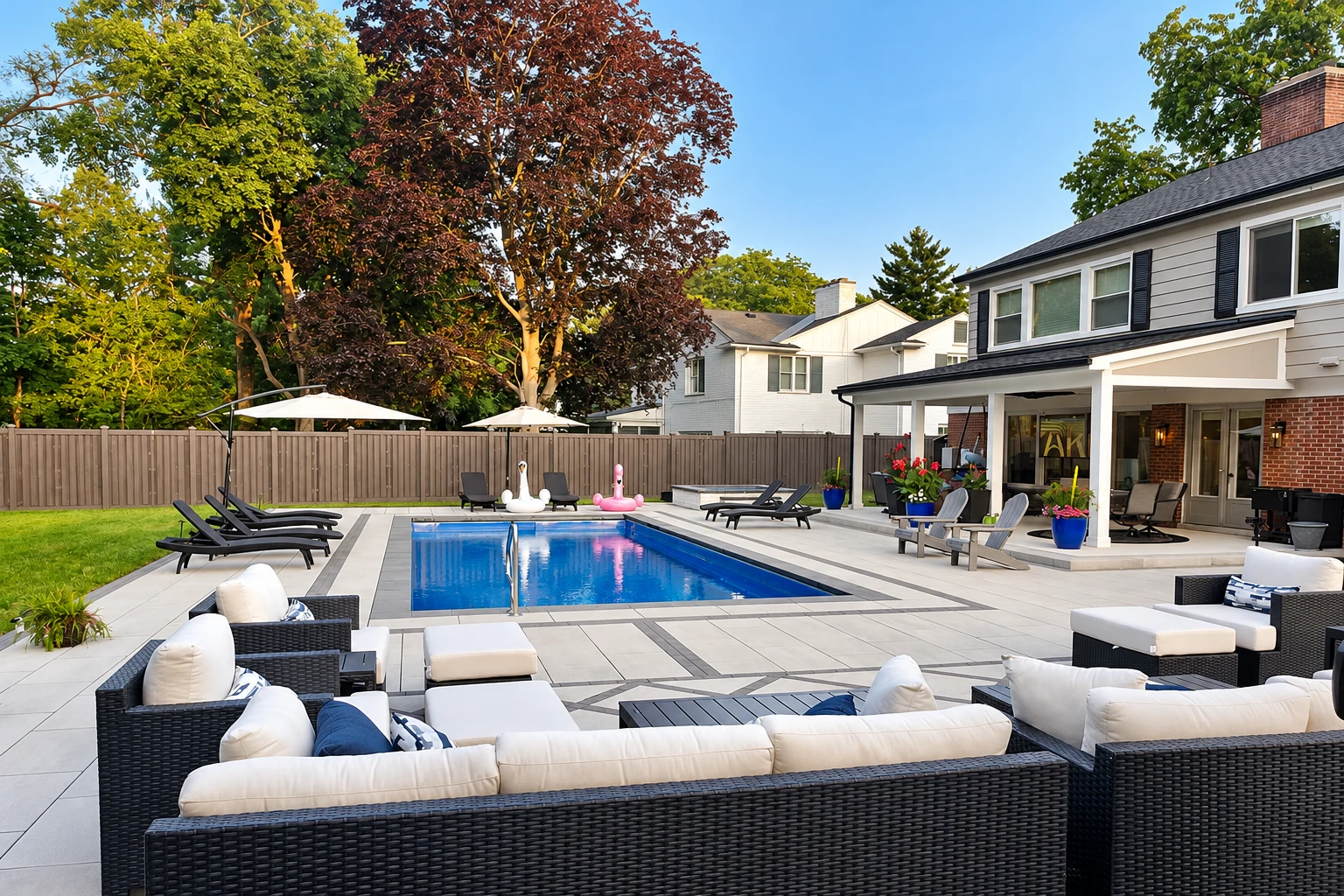
A concrete pool deck is the poured slab around your pool. On jobs in Redmond, WA, we build it to meet the coping, the cap along the pool's edge, without pressing on it, and to send water off the surface instead of letting it sit.
Most calls start with something you can see, like a deck that's cracked or flaking, a chip out of the coping, or a puddle that hangs around by the pool a day after rain. The cause is usually underneath, and old concrete has a way of showing you exactly where the last crew saved money, so the first thing I want to know is what your deck sat on and where the water went. Price mostly follows the size of the deck, whether an old one has to be broken up and hauled out, how easy it is to get a crew and equipment into the backyard, and how much digging the base needs. The schedule turns on the weather, the permit answer for your address and how much tear-out there is, and the estimate is where you find out what you're paying for before we start.
I do every estimate on site, and I start at the coping and the low spots where water sits. Our own crew does the work with me running the job, so the person who planned the gap and the slope is standing there when it's poured.
I learned this trade by asking older finishers a lot of questions and breaking up old slabs to see why they failed. We still do that. If your old deck sank or flaked, I want to know why before we pour new concrete that fails the same way.
We're licensed and insured. A pool deck means working right next to something expensive, with saws, wheelbarrows and a concrete truck nearby, so you should know before we start that the work around your pool is covered. Ask and we'll show you.
Before we start, I walk you through what's in the price, from tear-out to base work to the joint at the coping, so you're not guessing. Your satisfaction, guaranteed. Call (425) 285-8618 or use the form to set up a visit.
Send the form, call (425) 285-8618 or email hi@redmondconcretecompany.com, and we'll reply within one business day to set a time, with no obligation. I'll come out, measure the deck, look at the pool edge and check where the water runs. If you can, have the deck's rough size and a few photos of the pool edge ready, since they help me plan the visit.
Redmond's list of projects that don't need a building permit names sidewalks, driveways and detached decks, but not pool decks, so that list doesn't settle whether yours needs one. Before we set a date, we find out which city or county office covers your address and what your project calls for, then tell you plainly who'll handle the permit and the inspections. If you'd like to ask the city yourself, its Development Services Center takes permit questions at 425-556-7000 or permits@redmond.gov. The city also requires contractors to hold a City of Redmond business license before working there.
The city lists its frost line at 12 inches, meaning winter frost reaches that far into the ground, and a pool deck sits right where splash and rain keep it soaked when the freezes come. That's why where the water runs off the deck matters so much here. On jobs around Redmond we mostly see sloped backyards, long wet winters and older decks whose joints at the pool edge were never sealed or gave up years ago. We're based in Redmond and do the same work in the cities around it, including Kirkland and Sammamish, and if your city isn't on our pages, just ask.
A concrete pool deck, installed, usually costs about $7 to $14 per square foot in the Seattle area. That's the going rate in the market, not a quote from us. Where yours lands depends mostly on the size, whether an old deck has to come out, how hard the backyard is to reach and how much base work the ground needs. Your estimate gives you the figure for your own deck.
The gap lets the deck move without pressing on the coping. One coping maker's guide says that without a gap and flexible sealant there, a moving poured concrete deck can crack or chip the coping. When you compare bids, ask each contractor to show you that gap and sealant in the plan, along with how water will drain off the deck.
Get air worked into the mix, keep water from standing on the deck, and skip deicers the first winter. Entrained air, which is air worked into the mix, helps concrete hold up when it freezes and thaws while soaked, and it limits scaling, the surface flaking that ice-melt chemicals cause, so ask whether your mix has it. Industry guidance also says water standing on the surface for long periods greatly increases freeze damage, and that new concrete should go through its first winter with no deicers.
Check it every year and replace the caulk when it cracks, pulls away or wears out. That's what one coping maker's guide recommends. The same guide says most elastomeric caulks, the rubbery kind, last five to ten years, so plan on resealing somewhere in that window.
Sometimes, if the old concrete is a good candidate for a coating. A coating over a deck that's sinking or cracking from below usually just shows the same cracks again. We check the old deck's condition first, then tell you whether a coating or a new slab makes more sense.
Look them up on the state's Verify a Contractor tool from the Department of Labor & Industries. Washington requires every construction contractor to register with L&I and to be bonded and insured, and the tool shows whether a business has an active registration and a paid-up workers' comp account for any employees. It also lists safety violations and lawsuits against the contractor's bond.