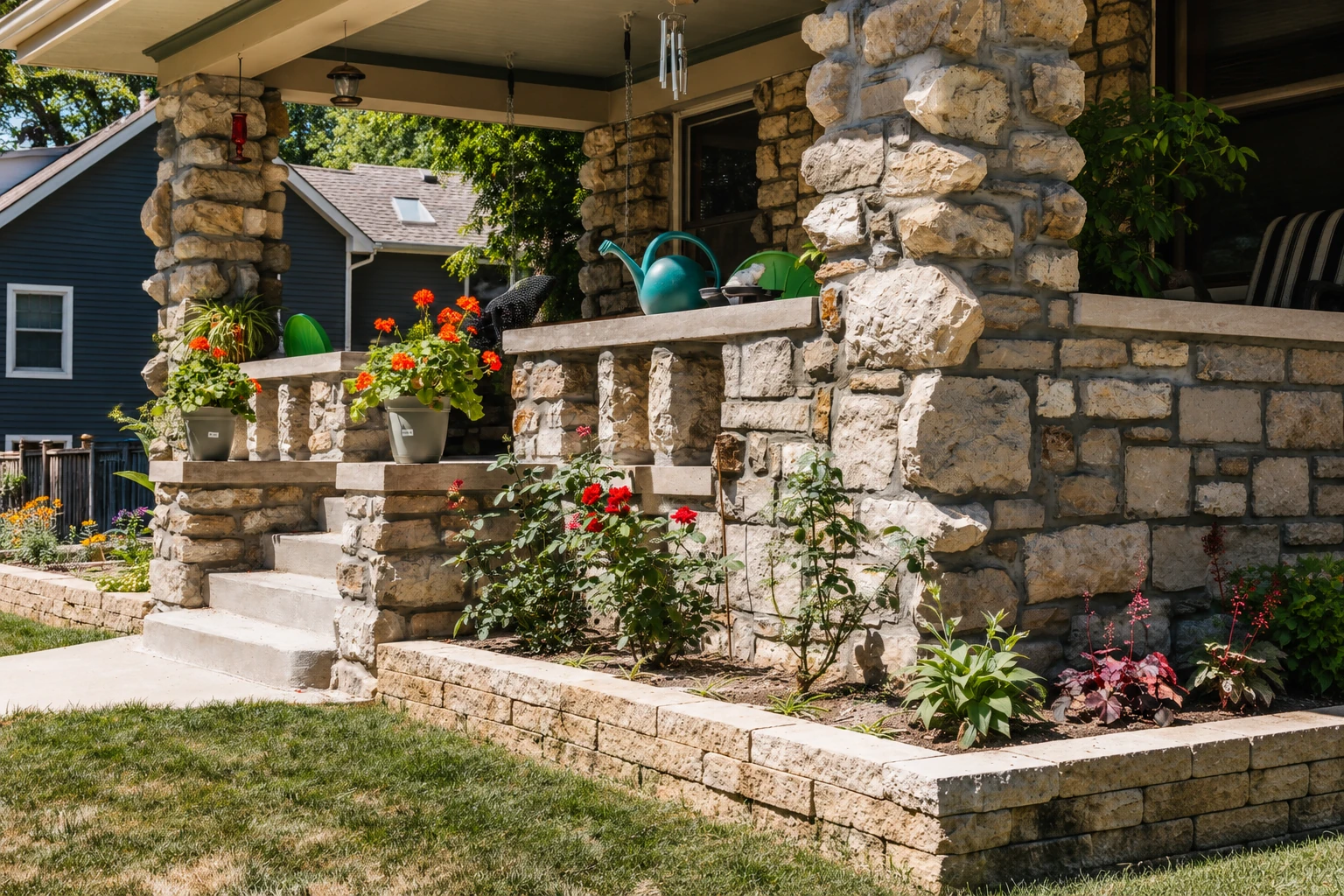
I start by working out why the old steps failed, because a new set on the same soft dirt will go the same way. We break out the old concrete, dig past the loose fill and pack a firm subgrade, the ground the steps sit on, then check where the roof and yard water runs so it heads away from the house and off the treads. Before any forms go up, we lay out the whole run from the door down to the ground, because a small error at the top shows up as one odd step at the bottom, and that's the one everybody trips on. Then we set the forms, tie in rebar, the steel that holds the concrete together if it cracks, pour, and give the treads a broom finish, a light texture that keeps wet shoes from slipping. We keep the new corners and front edges from getting bumped while the concrete cures. If a budget gets tight, I'd rather simplify the finish than skimp on the base, because nobody sees the base on day one and it's the part that decides how long the steps stay put.
Steps rarely stand on their own. When they land on a new porch or patio slab, we pour that slab as part of our slab foundation building work, and when they tie into a new addition, we plan them alongside the foundation installation so both sit on the same plan.
Precast steps for a simple run
Precast steps are made off site and set in place, which suits a short run up to a back or side door where a stock size fits the height. We still dig out and pack the base before they go down, because a precast set on loose dirt tips just like a poured one.
Poured steps for an odd height or a landing
Poured steps are formed to your exact height, width and landing, so they fit a door that no stock size matches. They suit front entries, wide steps and runs that tie into a walk or a slab.